Monday, January 9, 2012

Hello Everyone!

We are back! Debbie successfully finished her Master's Degree. Kelsie had her sweet little baby girl, and Haylie moved her family to a new state. We have been crazy busy, but we are back. We plan to post nearly every day, so come and visit!

HAPPY NEW YEAR!

If you are like most people, you have a handful of New Year's Resolutions that you are working on. I know that I have my share of them. This year, I have been reading a lot about, "making those resolutions stick," and I have learned a lot of interesting things that I want to share with you:

1. Write it down
Make a list of your resolutions and keep it somewhere where you can look at it often. If you are still trying to decide what resolutions to choose, Tsh,at Simple Mom,has some great questions to guide you...click here to go to her post.)

2. Break the resolution down into small pieces.
This idea was one of those ahhh experiences for me--it just made so much sense. There is another great post at Simple Mom that tells you how to accomplish this. (If you do not read the blog at simplemom.net, I would highly recommend it--they are amazing!) Here is a little bit of the post: "Kaizen is a Japanese word that means very small, continuous change. It’s little drips of water that fill a bucket over a long period of time, not a firehose in a few minutes." (Click here to read the entire post.) She explains how kaizen works, using the goal of waking up one hour earlier each day. She advocates setting the clock 2 minutes earlier each day. So...on the first night,if you usually get up at 7 a.m., you would set the alarm for 6:58 a.m. The next night, you would set your alarm for 6:56 a.m. You continue this process for thirty days,and ta da! you are getting up an hour earlier. Isn't that easy?
I put this into practice with exercising. It seems like I do really well in this area for a while, and then I go for a long time without a steady exercise routine. So, for the first week, I decided to exercise two times during the week. This week, the goal is three times, and eventually I will go at least five times a week. It seems so doable, and it gives me days to mess up at first, and still make my goal as I change my habits!

3. Write down your mini-goals.
I made this little book to keep track of my steps toward my resolutions.

The composition book has 100 pages, so I dedicated two pages to each week. I wrote the dates on the top of the page, and then all of my mini goals for the week, ie. exercising three times this week, and reading my scriptures at least three nights before going to sleep, etc. It has really helped me to record my little steps and work on successfully accomplishing my goals.

3. Tell yourself that you are not going for "Perfection," but for "Improvement."
This helps a ton if you are a little bit of a perfectionist like me! I choose not to focus on perfection, but instead on improving! I can keep going if I believe that the goal is improving--this leaves wiggle room when life gets in the way of the best laid plans. I do not have to be perfect in completing goals, I just have to be doing better each week.
One of my favorite quotes is by Joseph Smith. He said, "Direction is infinitely more important than speed." I love this thought!

Let's all head the right direction and improve ourselves day by day!
Debbie

Saturday, May 21, 2011

A Teeny Tiny Birthday Party

My littlest chick turned 10 last week and she wanted a "Tiny" Birthday Party. We brainstormed a few ideas, looked on the internet, and this is what we came up with...

Invitations:

I typed up the text for the invitations using Calibri, font size 8, and then reduced it 20% on the copier. We backed them with scrapbook paper, and made tiny envelopes. I had lots of little magnifying glasses, so we gave each girl one, with the invite.


Games:
The first thing we did was to decorate tiny little cakes. My little chick had an American Girl magazine that featured tiny treats for girls to make. It was taken from their book called Tiny Treats.


To make the cakes, take 2 oreos or other round cookies. Frost the top of one cookie and stick the second one on top. Then frost the two cookies as if they were a cake. I let the cakes sit overnight, and they soften so that you can cut them!

Image from unconfidentialcook.com

To decorate the cakes, we used small tubes of icing, (the ones that are made for writing on cakes), and sprinkles.


Next we went on a teeny tiny treasure hunt. The clues were made just like the invitations, and I posted them outside. The group had a magnifying glass to read them. (They were pretty tough to find, because they were so small, which was great fun for girls this age.) At the end of the hunt, the treasure was individual bags filled with tiny treats: a package of Gripz Chips Deluxe cookies,Gripz Cheez-it crackers, tiny nail polish, tiny little dogs with collars, leashes, blankets and chew toys.

The dog idea was from the American Girls Tiny Treasures book.

The last game we played was "How well do you know Little Chick?" We made up a list of questions: favorite color, favorite class at school, etc. and we gave the test to all of the party goers. The girl who got the most right, won the game.

Come back on Monday for part two, where we will talk about food to serve at a Tiny party!

Friday, April 8, 2011

Using and Storing Fresh Herbs--Sage

Sage is an herb from the Mediterranean, but it is widely available here, (think Thanksgiving and stuffing!) Fresh or dried sage can be used to flavor meat before cooking--just sprinkle it over the top. A sprig of it can also be put inside a chicken or a turkey breast. You can also put leaves and left over stems on the charcoal when grilling and it will flavor the meat. See E How for more information.
(Image from theherbgardner.blogspot.com)
Storing fresh sage:
Fresh sage can be cut, wrapped in paper towels, and stored in a plastic bag in the fridge for 4-5 days. Leaves can also be picked, covered with olive oil, and then stored in the fridge for up to 3 weeks. Be sure to use the flavored oil.
Freezing Sage: Sage can be easily frozen, just wash and dry leaves, pack loosely in plastic bags and freeze for up to one year. Freezing will intensify the flavor. More information here.
Drying sage:
Dried sage is preferred by most cooks. There is a wonderful tutorial here. Sage can be dried by tying sprigs together, putting them in a brown paper bag, and hanging the bag upside down for a couple of weeks. Be sure to cut a few slits in the bag. When the herbs are dried, separate the leaves from the stems and store them in an airtight container. The leaves can be crushed, but the oils will last longer in whole leaves.
Sage as medicine:
Sage can be used for medicinal purposes too! Suite 101 has a really good article about this. Sage is a natural source of estrogen and can be helpful in combating menopausal symptoms, such as night sweats. To do this, put 10 fresh leaves in a cup, pour boiling water over the leaves, and let it for 5 minutes. Strain out the leaves and add a bit of honey. Drink this tea one hour before bedtime for three nights, and then every few nights after that. Sage can also be taken in a gelcap if you do not like the taste of the tea!

See you back on Monday!

Have a great weekend.
Debbie

Thursday, April 7, 2011

Using and Storing Fresh Herbs--Oregano

Oregano is a member of the mint family. It is a strong, bold herb that can be used to make many dishes. Most recipes call for garlic and oregano to be paired together. Oregano leaves can be snipped off and used directly. Fresh oregano stems can also be cut and stored in a plastic bag in the fridge.
(Image from examiner.com)
Drying Fresh Oregano: Click here for a more in depth description from E How.
To dry, cut stems of oregano and hang upside down in a cool,dark place. Dried oregano can then be put in a paper bag to catch the leaves as they fall. Remove the leaves and store in an airtight container.
Freezing Oregano:
If you freeze oregano, it will retain more of its flavor and aroma. Freezing is simple...cut a stem of oregano, strip the leaves off, and put them in freezer bags and freeze. Another way to do it is to lightly chop the leaves, mix with olive oil and put the mixture into ice cube trays and freeze. Be sure to label the bag, and store the cubes in a ziploc bag in the freezer!

Come back tomorrow to talk about sage.

Have a great day!
Debbie

Wednesday, April 6, 2011

Using and Storing Fresh Herbs--Basil

I LOVE the smell and taste of basil! My plant perfumes the entire kitchen when it is handled at all. Basil leaves can be picked and used directly in everyday cooking.
(Image is from diylife.com)
You can also cut entire stems of basil for future use. According to E How Food, cut basil should not be stored in the refrigerator. They suggest, instead, that basil should be cut and then the stems should be put into a glass of water and left out on the kitchen counter top, where it will last for days or weeks. Note: If you purchase the basil at the store, cut the stems before putting into water. Also, the cut basil should not be in direct sunlight.
Freezing Basil...
Basil is a soft herb, but it can be easily frozen:
Chop the basil and put it into ice cube trays--cover each section with water and freeze. Pop the ice cubes out and store them in a large ziploc bag.
(Image from the website Kalyn'skitchen.com)
Another great way to freeze basil, is to coarsely chop it in a food processor,(with two or three tablespoons of olive oil drizzled in per batch.) Be sure that all leaves are coated with oil, (this will keep them from turning black in the freezer.) Kalyn's Kitchen has a step by step tutorial here.
Growing Basil...
Basil requires 6-8 hours of sunlight and well drained soil. Pinch off the flowers as they begin to form. Haylie let some of her basil flower, and it changed the flavor of the leaves on that stem. She pinched off the flowers, including the surrounding leaves, and the rest of the plant tasted ok.
Read more about growing basil here.
E How has a pesto recipe that I want to try. It sounds so easy!
(Image from statenislandfoodandwine.com)
Everything goes into a food processor:
2 cups fresh basil,firmly packed
3 cloves garlic minced
1/2 c. pinenuts
1/2 c. fresh parsley
3/4 c. grated parmesean cheese
1 tsp. salt 1/2 tsp. pepper
Process. Then add 2/3 c. olive oil and process again.
The pesto can be eaten fresh, or it can be frozen.
To freeze, put into small containers and add a small amount of olive oil to the top. Seal and freeze!

Come back tomorrow to learn about oregano!

Debbie

Monday, April 4, 2011

Using and Storing Fresh Herbs--Rosemary

I have loved having fresh herbs available, but I was not really sure what to do with them. This week I will share with you what I have learned.
(Picture from veggiegardeningtips.com)
Rosemary is considered a hard herb. It is a wonderful savory herb that can be used for meats, breads, and any Mediterranean-type cooking. Sprigs of rosemary can be used whole, but it is more common to just use the leaves. To separate the leaves from the stem, hold the sprig by the top and strip the leaves down. I like to chop the leaves for some things, but you can also use them whole. Rosemary can be dried, but it tends to lose some of its flavor. Large stems can be soaked in water and used as skewers.
Here is a nice site about using rosemary.
You can store rosemary by picking it, washing it in cold water, and putting it in a ziplock bag. Put the bag in the freezer for a couple of weeks. Take the bag out of the freezer and roll it with a rolling pin until the leaves fall off. Separate the leaves from the stems and pack the leaves into a small canning jar with a tight-fitting lid. Label the jar and put it back in the freezer. (This works equally well for thyme.) You can read here for a more complete how-to from Kaylyn's kitchen, who says that the herbs can be stored this way for more than a year.
Growing rosemary- Most experts agree that it is easier to grow rosemary from a plant that you buy from a nursery. Rosemary can be propagated from an existing plant by following the information here.
They need lots of sunshine, and do not like to be too wet. Indoor rosemary plants need to be transplanted once a year.
Come back tomorrow to learn about how to use basil!

Debbie

Friday, April 1, 2011

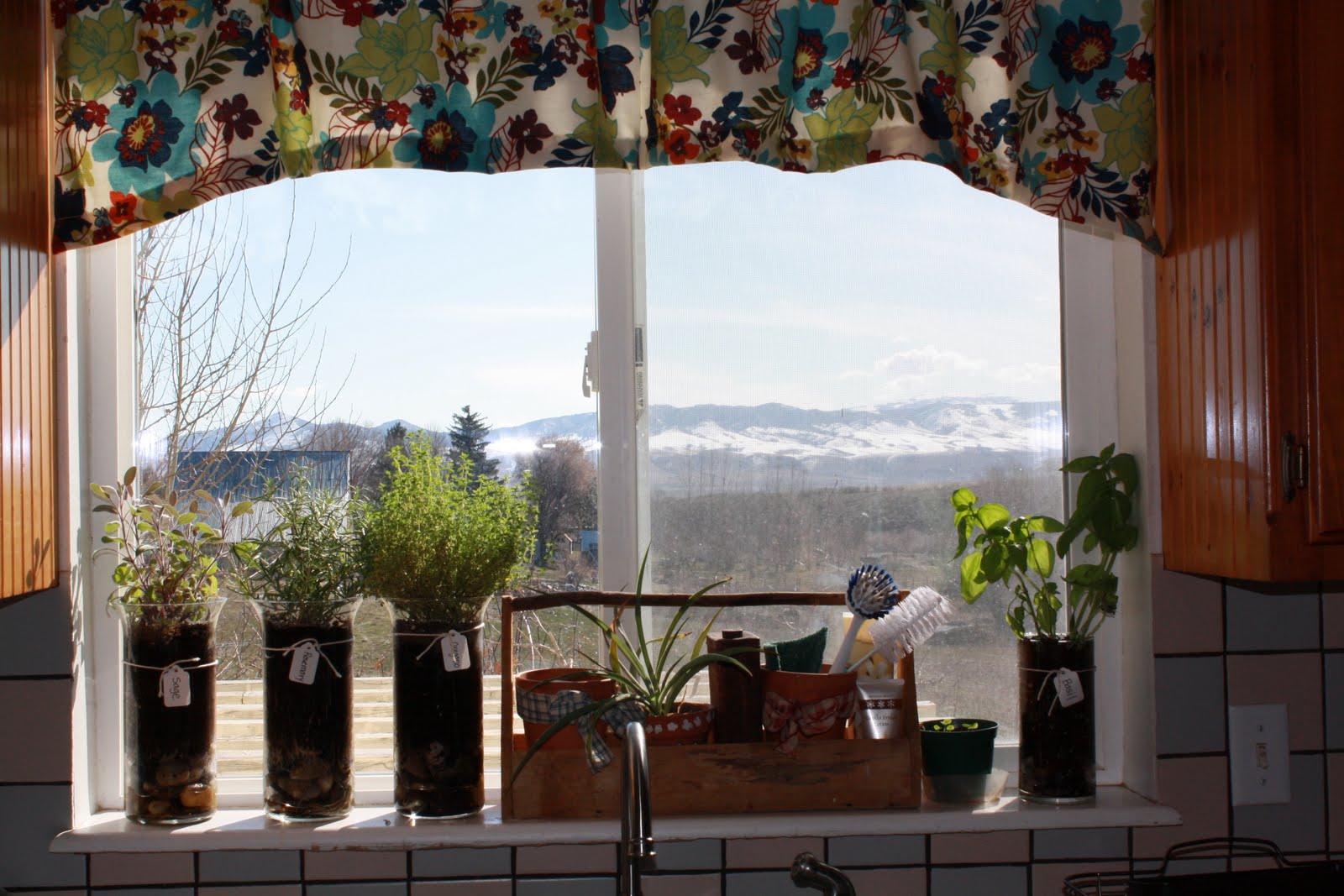
An herb garden...waiting for spring

One of my favorite blogs is Budget Wise Homes,(see my sidebar), and she wrote a great post about creating a mini herb garden. I had been wanting to learn to cook with fresh herbs, so I decided to try her idea!
I bought the clear containers at the dollar store, along with a package of rocks. I put the rocks in the bottom of the vases, poured in some potting soil, added the plants and tags with the name of the herb on it and that was it!

Tomorrow I will post about how to use your kitchen herbs!

Debbie